ATHLETE Q&A’s
Jake Smith / Phile Wylie / Emma Stepto / Dave Buzza
JAKE SMITH
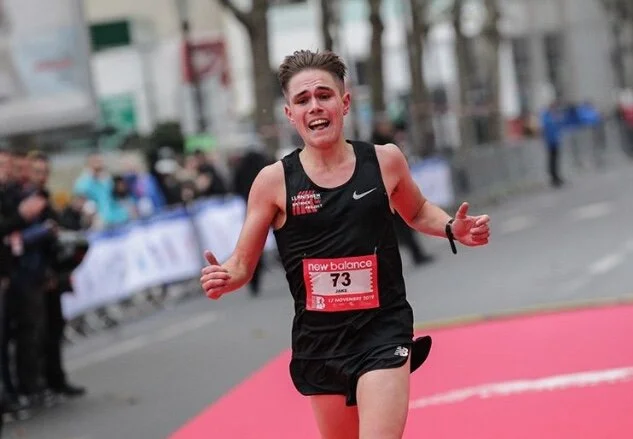
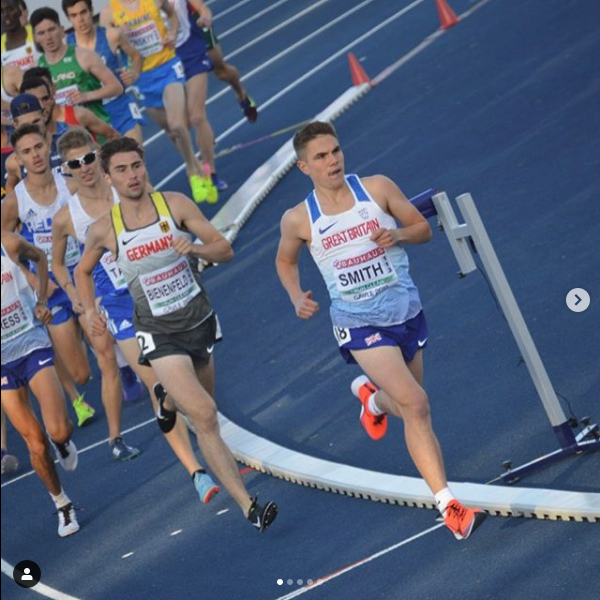
Jake’s a pretty tidy runner with a half marathon PB of 1hr02min, among other very impressive PB's! Now based in Cardiff but still a proud member of local club Axe Valley Runners.
The idea behind this 10 question interview is to obviously give our community an idea of what goes into running this fast - but more importantly understand that it's all 'relative'! We can all learn from runner's like Jake in terms of their approach and structure of training, all in the pursuit of personal improvement.
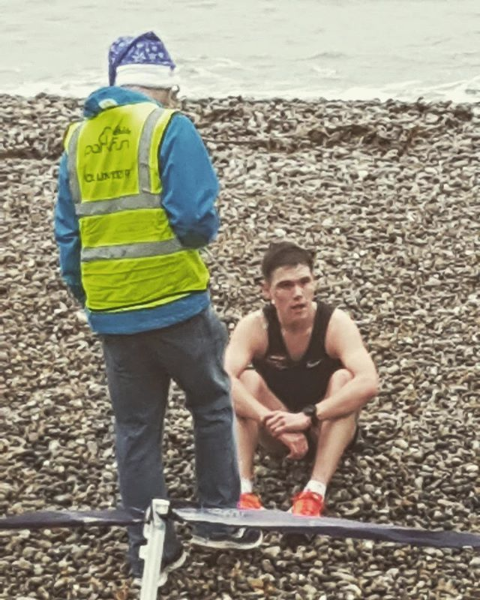
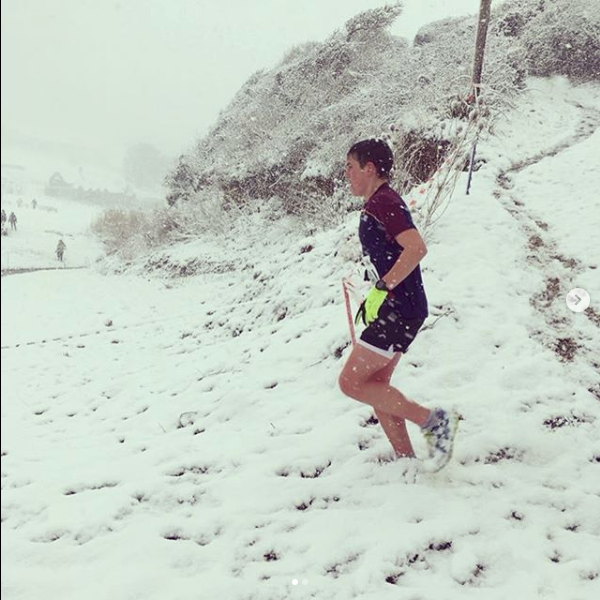
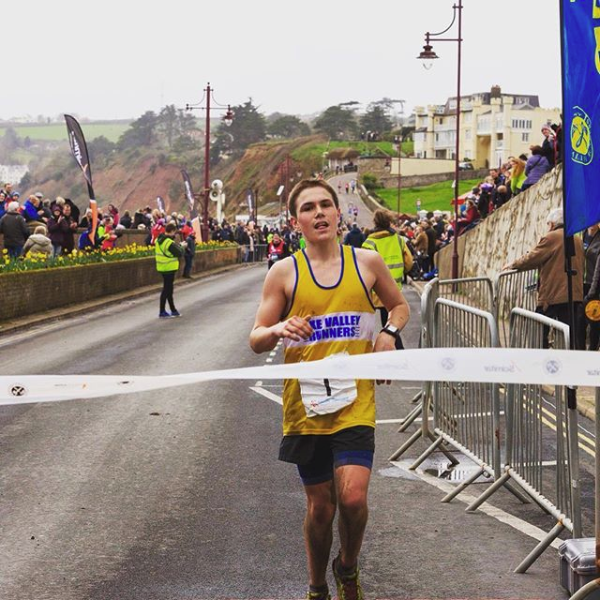

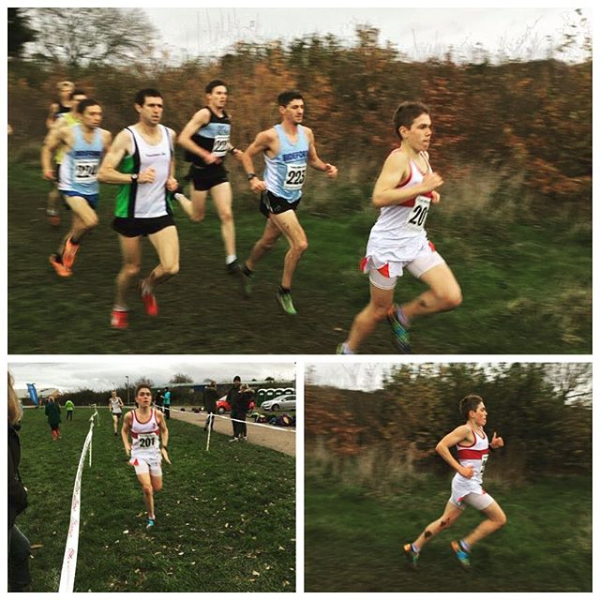
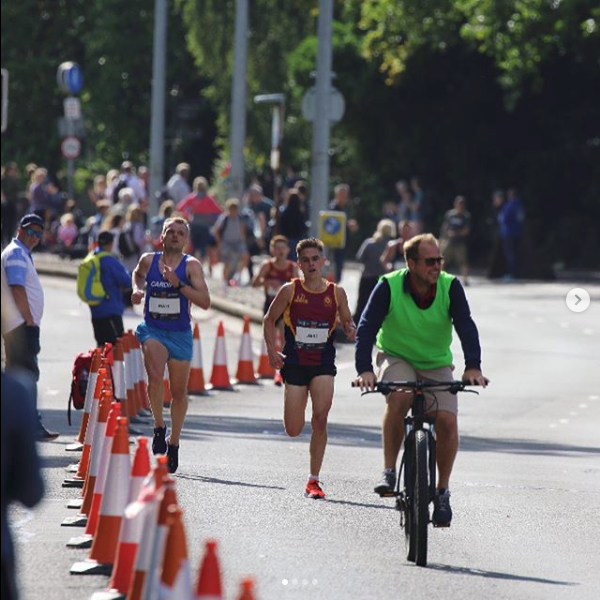
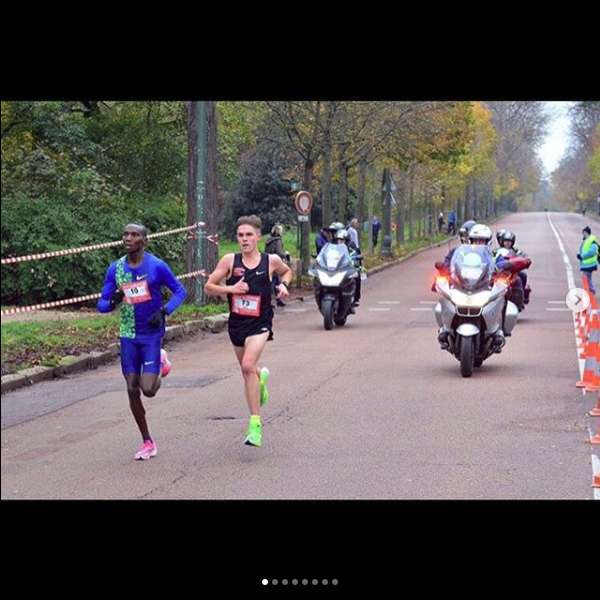
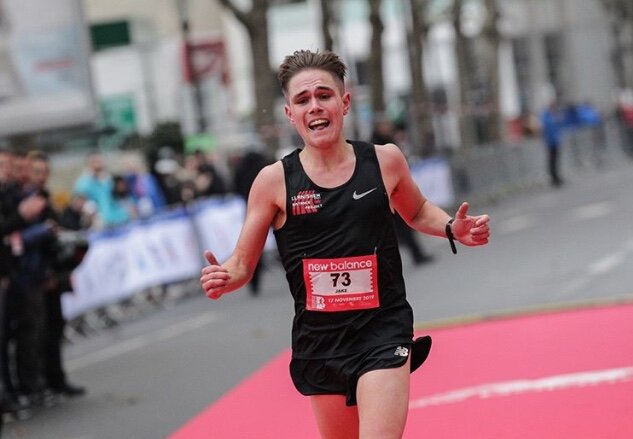
Q: Please give us a overview of you're running background? What got you into it, how has you're running developed?
JS: First got into running when I was 12 living in Hong Kong. My parents often took me out for runs over the mountains and I was part of the school’s athletics club. I also joined a local running club which met once a week. Alongside running I was playing football, rugby and hockey at school which helped develop my fitness levels
Q: What does a typical training week look like? What would the focus and time of year be?
JS: Week: 90-100miles
Monday - AM: Recovery run - PM: Progressive run
Tuesday - AM: Recovery run - PM: Quality session
Wednesday - AM: Easy longer run - PM: S&C
Thursday - AM: Easy run - PM: Steady run
Friday - AM: Recovery run - PM: Quality session
Saturday - AM: Easy run
Sunday - AM: Long run - PM: S&C
City Runs: Obviously Jake is clocking some big miles and quality workouts but our key observations on the week structure are...
x2 quality sessions per week
1 Long Run
2x Strength and Conditioning
Plenty of easy/recovery runs
Q: Favourite session and why?
JS: Long run or 2x 4 miles (3 min jog)
City Runs: Judging by Jake's social media / strava a long run is around 20 miles @ 6min miling. Jake's Strava: https://www.strava.com/athletes/13780211?hl=en-GB
Q: Least favourite session and why?
JS: Anything short and fast
City Runs: Jake is still pretty quick over the shorter stuff, with PB's of…
1500m 3:56
3k: 8:06
5k: 14:00
10k: 29:01
Power 10 Profile - https://www.thepowerof10.info/athletes/profile.aspx?athleteid=722919
Q: What strength and conditioning do you do and how often?
JS: Do S&C twice a week. Do core, drills and lighter leg conditioning
City Runs: No getting away from it S&C is very important it you want to improve it helps runners to avoid injury cope training load stress.
Q: What do you think is key to good recovery and getting the most out of you're training?
JS:
Sleeping well
Diet,
Rolling + stretching
City Runs: The details and discipline around recovery make a big difference over the longer term - recovery from training should be viewed as a key ingredient to improving .
Q: What's it like training in Cardiff and gives us an idea of what life is like living in a house of elite runners?
JS: Cardiff is a great place to train as it has the Taff trail, indoor and outdoor track, Leckwith trails and Llandaf fields all to train on. Living with these boys has really helped my running improve especially when I don’t have to do a single run by myself.
City Runs: Jake lives in house with some other very tidy runners, which makes a great environment to live and train: http://www.dai-sport.com/athletics-cardiff-1okm-lewis-smith/
You can follow the ‘running house’ on instagram - @llanishenstreetdistanceproject
Q: Talk us through your British U23 Half Marathon Record, in terms of build up and the race itself?
JS: The sessions before the half were very tough but they did get me fit and strong. Did a few harder long runs too. The race was perfect as there was no wind and running with the front group really helped during the first half of the race. Then when they started to pull away from me I had to dig deep for the rest of the way. Was very surprised when I saw that time on the clock and just fell to the floor in happiness.
Q: What are your goals going forward?
JS: Want to run personal bests over all distances on the track (1500m-10,000m). Get into the world half team and run 28:30 for 10,000m
Q: Finally, what are your top tips for runners of all abilities trying to improve and hit their targets?
JS: For me the biggest tip I would say is consistency. If athletes are able to follow a similar program every week they will get fit from it. Also need to make sure they keep their easy days easy to recover in order to train well for the rest of the week
City Runs: Amen to that! No matter what your ability, if you want to improve the consistency is king!
Big Thank You to Jake for his time in doing this interview. We wish him all the best for the future - we think some very BIG things are on the cards in the near future.
Follow Jake on Instagram - @jakesmith_lsdp
Phil Wylie Q&A
Here is a Q&A with top local runner Phil Wylie - @wylieduathlon .
Obviously Phil is an elite athlete but his insights are very interesting and relate to aspiring runners at whatever level. He talks about getting the most out of his training on a time budget with work and 2 young kids.
Phil has taken part in a lot of our races over the last few years and boasts a PB's of 29.30 for 10k and 66.46 for the half, he's hit the Vet 40 cat but is showing no signs of slowing down!

Emma Stepto Q&A
Emma Stepto is an international runner and also proud member of local club Cornwall Ac. Emma has had a hugely impressive career and is still going strong, with PB’s; 10k - 33.02, Half Marathon 72.28 and Marathon 2.32.
The idea behind this 10 question interview is to obviously give our community an idea of what goes into running this fast - but more importantly understand that it's all 'relative'! We can all learn from runner's like Emma in terms of their approach and structure of training, all in the pursuit of personal improvement.
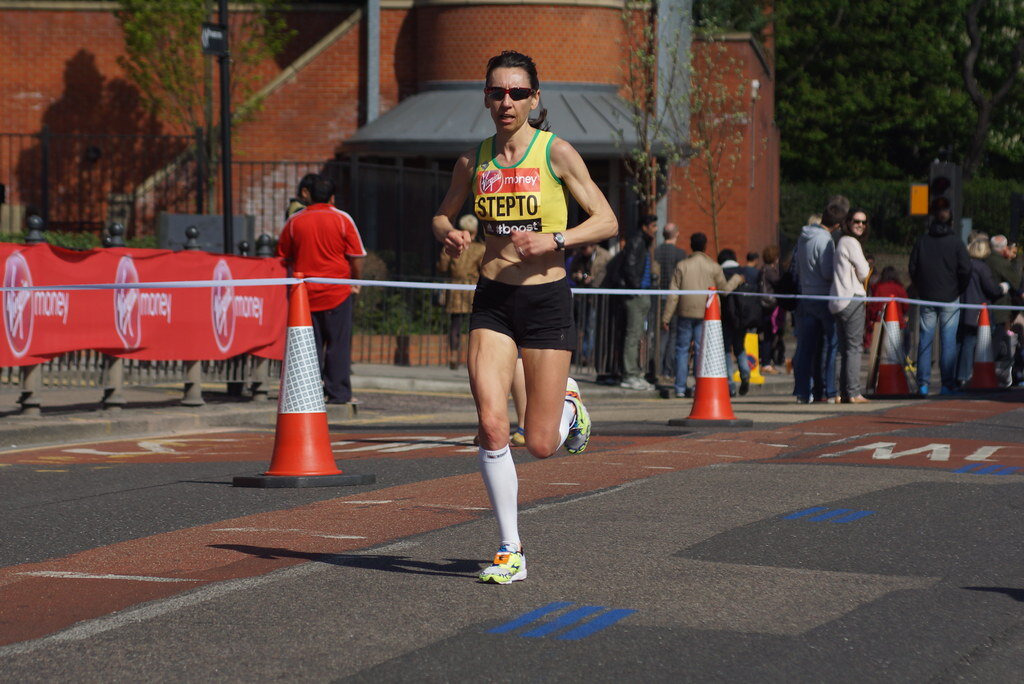
Q: Please give us an overview of you're running background? What got you into it, how has you're running developed?
I enjoyed running at school- mainly the 800m/1500m and cross country- but never really took it beyond PE lessons, as I was so involved doing a whole range of sports. I loved any physical activity and always had the urge to master each sport and see how much I could improve. It wasn't until my early 30's that I got specifically into running and with more dedicated focus- it was thanks to the Race for Life events initially! I then trained for a Half Marathon and shortly after completing it moved back to Cornwall and joined Cornwall AC.
From that point on I learnt an enormous amount and began racing regularly, following a training schedule and being coached by Alan Rowling. It took quite a few years to eventually be selected to run for England and take part in International and National races at elite level- but that was a dream time for me. Now I’m adapting my training to cope with getting a bit older and less speedy, and aiming for new (but still just as challenging) targets.
Q: What does a typical training week look like? What would the focus and time of year be?
Usually when not marathon training I do around 60/65 miles per week. That’s 7 days a week running and I double up on running sessions a couple of days a week [when not on Lockdown!].
Key sessions are track night on Tuesdays, tempo run on Thursdays and Park Run or mile reps on Saturdays, long run on Sunday (18). The rest is all easy, relaxed running.
If marathon training, I’d increase the weekly mileage to 80/85 miles. I have found that 85 miles is a tipping point for me- beyond that and I tend to suffer bad injuries. As I work fulltime, I can’t get enough rest and recovery for my body to cope with 100 miles a week! I learnt that the hard way though.
I also [usually!] include 3 or 4 swimming sessions a week, plus some S&C/ flexibility exercises at home.
Summer is focused on track races and developing speed (so a lower weekly training mileage) and Winter is often focused on building endurance and strength for a Spring Marathon, so higher mileage….unfortunately, as it’s the worst weather then!
Q: Favourite session and why?
I really enjoy any session with long tempo intervals (anything from 1000m to 2 mile reps) - as I really enjoy finding the mental focus needed to maintain pace. It takes a lot of focus to find a flow and to learn how your body feels at certain paces- without having to look at your watch. I feel like I’ve worked really hard after doing long intervals, and notice the fitness gains from these sessions. They replicate race scenarios much more than short sprint reps on the track and are much less of an injury risk for me.
Q: Least favourite session and why?
Any continuous track session with varied paces, ie short,fast reps with ‘cruising’/ tempo recoveries. This is just the complete opposite to my favourite session, as it’s constantly breaking that lovely focused flow and sustained tempo. I totally know I need to do these session- to practice changes in pace which are crucial at times in races- but I never feel like I’ve really nailed them. ONE DAY maybe!..?
Q: What strength and conditioning do you do and how often?
I only do a couple of short sessions a week- due to time restraints, so have to really target my weaknesses, rather than trying to do a full S&C programme. It’s mainly core exercises and hip/glute/hamstring strengthening that I can do at home. Incorporating flexibility is also important- more so now than ever. I’ve had invaluable help over the years from physios, so I pick out the exercises that work best for me, from their great advice. I think it’s better to do a few things well and make them count, than try to do everything in a mad rush.
Q: What do you think is key to good recovery and getting the most out of your training?
I think really good nutrition is vital to good recovery and adaption to training. Fresh food and a varied, balanced diet. To my thinking, it’s absolutely your foundation; as your body can only work with what you put in it- ‘you get out what you put in’. If you don’t have the energy to train, you will break down. If you can’t rebuild muscle and keep bones strong and tendons flexible, training will break you down.
It’s a holistic combination of everything- nutrition, sleep, cross training, rest etc. and the harder you are pushing yourself- or the more you want to achieve, the more vital that is. No one thing will be the key.
Getting the most of training is also about the mental side-planning, learning, researching, getting expert advice from coaches/physios and working on sports psychology. Emulating other successful athletes and adapting what they do to your situation. There is so much to do!
Q: What's it like training and racing with Cornwall AC, despite a lot of travelling a club that has always competed in the big national club events?
It’s as much an honor to me now, as it was when I first joined! My first club run- and there was world class athlete Dave Buzza jogging along chatting to us and I was in awe that he would be part of a slow group social run. But having top class athletes to look up to helps you aspire to achieve more yourself.(CAC has had 50 athletes representing their country at International level- across the disciplines!)
Taking part in larger competitions around the country and abroad gives you the chance to compete with an even wider calibre of athletes. I’m so glad CAC doesn’t shy away from the big championships. It would be easy to stay in a local bubble- but improvements comes from taking on new competition and being out of your comfort zone. It is a pretty costly affair mind you- with fuel/ travel and accommodation adding up across the year!
Q: Looking through your [Power 10] you have a lot of very impressive results. Which one(s) are you most proud of? Can you online the race and your build up to it?
I’m lucky I had the most amazing coach who believed in me and made the incredible opportunities I’ve had possible. I wouldn’t ever say I am ‘proud’ of my performances for that reason- because they weren’t just me achieving them- there were so many supportive people who played crucial parts....Alan most of all, but also other coaches, physios, masseurs, kit and shoe suppliers, family, friends and teammates.
My dream race was Cardiff Half Marathon 2014 when I became British HM Champion and finished 3rd- between 4 Kenyan ladies. I was training for Frankfurt Marathon and the whole Summer had gone perfectly- no injuries, really tiptop fitness (there’s so much luck involved in all the elements coming together without a hitch!)
It was so memorable because I was totally in the zone for the whole race at Cardiff. I felt so balanced, full of easy energy and light on my feet. I was completely focused on my pace and really trying to hold back until the 10 mile marker when the tough part kicks in and there is an uphill section. I remember being slightly perplexed why I could see the Kenyan ladies- I thought they must be taking it easy! It just didn’t register that I was probably in the shape of my life.
The last turn into the finishing straight was like running through a kaleidoscope- everything was out of focus, just noise and colours. I knew one of the Kenyans was right behind me and how fast they can kick at the end and I was screaming to myself- “don’t let her past now, don’t lose 3rd place now- SPRINT!!!!”
I have a picture of me taken straight after the finish, tearfully looking up at the sky. I was thanking my late grandparents and brother- as I’d felt they were with me the whole way. I just felt their support and never felt alone. That’s one of the reasons it was my most special race.
Q: What are your goals going forward?
I’d like to target some Vet 50 UK records- they are not easy and some will be slightly more realistic for me to aim for than others. Also I’d like to do a marathon again, as it’s been 5 years since I last did one. I was training really well for London 2020 and then the Coronavirus crisis hit. But it should have given me a good base to build in again later in the year.
I’ll always keep aiming to support and develop our CAC ladies team and want to continue working as the Club Secretary and with other clubs in the Duchy Athletic Network. I’m proud of the running community we have here in in the SW and if I can give back some of the support and encouragement I’ve had over the years, I will be glad to do it!
Q; Finally, what are your top tips for runners of all abilities trying to improve and hit their targets?
Be curious- learn and experiment with what works for you and what you enjoy doing in training and racing. Set targets and sensible stepping stones to get them (even if they seem too ambitious right now, you can roll them over each year and just get gradually closer to them). Don’t limit yourself and definitely get proper coaching from someone you respect and have 100% confidence in. Don’t get overwhelmed by achievement and attainment and forget to love running! X
Further Reading…
Big Thank You to Emma for taking the time to do this interview with us.
Dave Buzza Q&A
Dave Buzza is an international runner and also proud member of local club Cornwall Ac. He has represented Great Britain in the Marathon at the World and European Championships and also England at the Commenwealth Games. His greatest success came at the marathon but this was underpinned by his work over the shorter distance including cross country, as you can see from his impressive list of PB’s…
1500m - 3.42.
3k - 7.56.
5k - 13.50.
10k - 29.16.
10m - 47.17.
Half Marthon - 63.13.
Marathon - 2.11.06.
The idea behind this interview is to obviously give our community an idea of what goes into running this fast - but more importantly understand that it's all 'relative'! We can all learn from runner's like Dave in terms of their approach and structure of training, all in the pursuit of personal improvement. The key advice we have taken from this article is the importance of a gradual build up, speed is important… the faster you can go over 5k the faster you’ll be able to go over a marathon”, not going too hard in long training runs and taking away from your actual marathon race.
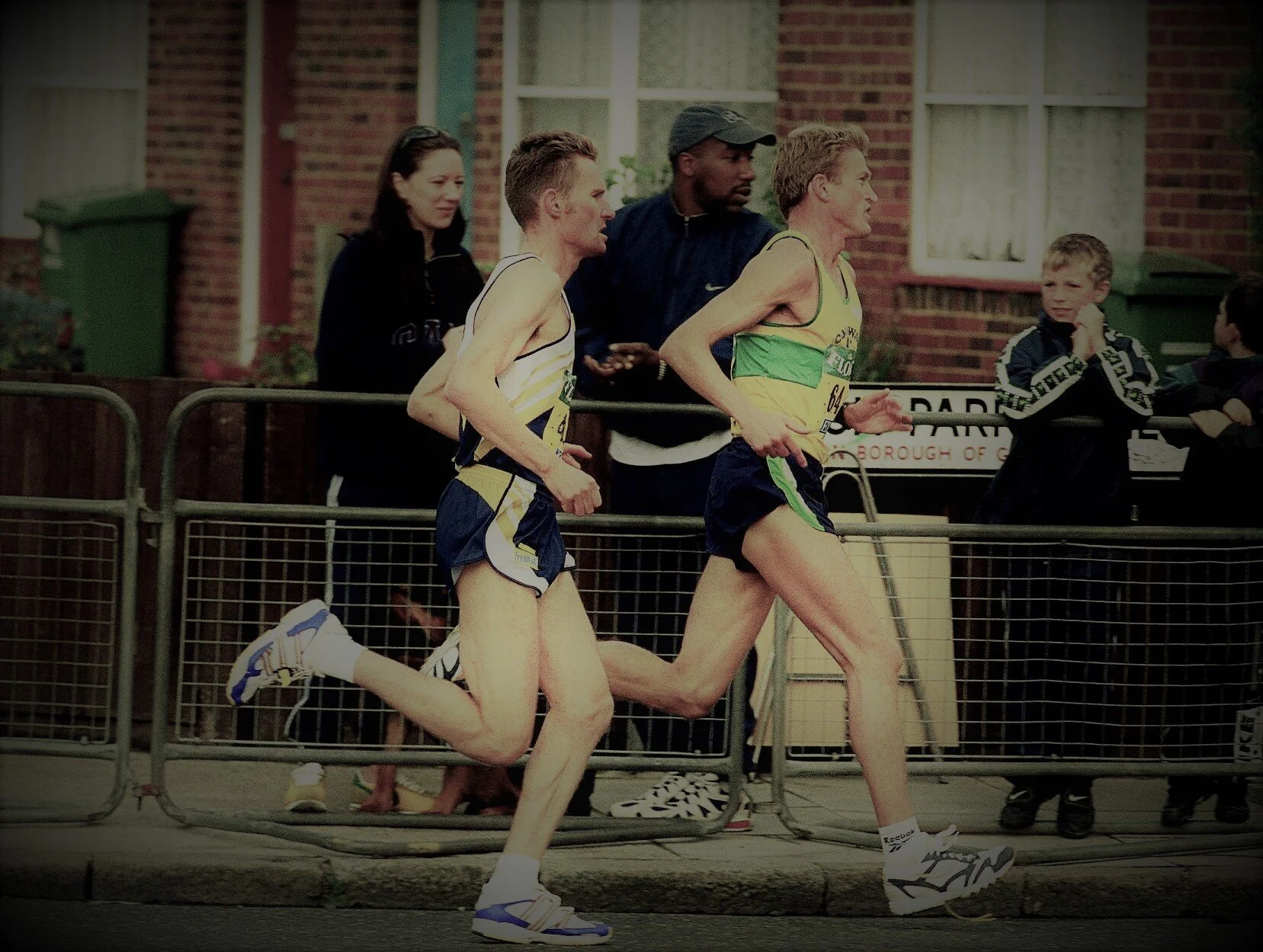
Q: Please give us an overview of you're running background? What got you into it, how did you're running developed?
Jog/walked very occasionally with my PE teacher father, but first proper run was aged 11 when an older mate, Kevin Heather (a top Cornish runner) asked me to go for a road run, told me the route and gave me a minute's start. Worked out after that it was 6 miles and hilly - and he beat me, though only caught me at 4 miles! Played a lot of sport, but started actual running training twice/week at 14 with Alan Rowling who taught me at Redruth School. Played Cornwall rugby at school as well and only prioritised athletics in 6th form and particularly after going to Uni. Always beaten at school by Jon Richards who was almost 18 months younger, but best in Britain and lucky to have Alan Rowling as a Geography teacher who encouraged in his very low-key style. Re-took my A Levels to get to Loughborough Uni (slept through a lot of my lessons/revision!) and started training seriously then. First international selection for England U23 tour to China in 1985.
Q: What did a typical training week look like as an international marathon runner?
Sun - Am: 27 miles easy - Pm: 6 easy
Mon - Am: 10 easy - Pm: 7 easy
Tue - Am: 7 easy - Pm: 10 x 400m (every 2 mins - averaged 64, so 56s rest)
Wed - Am: 14 easy - Pm: Gym circuits 2 x 25s, 1 x 15s - double recovery with 4 easy before and after
Thu - Am: 6 easy - Pm: 8 inc 4 mile tempo (20 mins)
Fri - Am: 6 easy - Pm: 9 easy
Sat - Am: Westward League X-C Plymouth 1st
Total 126 miles
First marathon I did while full-time PE teaching -16th London 1991 in 2.12.37 - stopped teaching to train full-time at end of that summer. Didn't always run these miles, but usually well over 100 in marathon build up.
Q: Favourite session and why? Least favourite session and why?
Favourite anything on rolling fields/trails. Least favourite long reps on track or tempo runs - always found the latter hard to pace on my own. Would either be flat out or too slow!
Q: If you had to pick one key marathon training session what would it be?
Long run, though I always ran mine easy/steady. When training in Australia the group included a hardish 2 miles on a slight incline in this, but I preferred generally to run long rather than fast. With hindsight I may have got fitter including the occasional fartlek/tempo, but generally used Tues/Thurs/Sat sessions for the faster stuff. I feel that a lot of marathoners see the super-long Sunday run sessions, do too many and leave their best out on the roads before the target race. My big worry before my first marathon was lasting the distance, hence lots of 20-25 mile runs and a couple over-distance.
Q: What are your thoughts on strength and conditioning for runners? What S&C did you do when you were competing internationally?
Think gym circuits great for body balance/strength/injury-prevention and did them once/week in winter most of my career. Did weights twice/week at Uni in the winter and think important for shorter distance events. Not a fan of stretching, particularly static. Dynamic stretching often incorporated to an extent in the circuits.
Q: What do you think is key to good recovery and getting the most out of your training?
Build up gradually - I'd been training for 15 years before I ran a marathon and had been running for 1.5 - 2 hrs most Sundays for 10 years. Massage good for injury-prevention if it's available/affordable and, personally, I've always run 90% plus off-road, which doesn't beat your legs up as much and cause repetitive stress injuries. Gym circuits give a stronger musculature helping to prevent injury as well. If you've built up gradually to heavier training loads over years, an easy recovery day is 2 runs of 8 and 6 miles though!
I used Friday and Saturday as a safety valve. If I was feeling really tired I'd just do one run on Friday and a session on Saturday morning without an afternoon run. Saturday sessions were always short - 20 min fartlek/10 x 200m/10 x 400m max as I felt 3 long, hard aerobic sessions a week plus long run were too much.
Q: You always competed over cross country and scored some very impressive results, you were also a regular at the local Westward League Cross Country League. What are your thoughts on the benefits of cross country?
There were very few road races around when I was a teenager and I grew up running X-C and track mainly. As I mainly trained off-road and played a lot of sport, I felt I was always better compared to others with broken rhythm on the country, despite the fact that my greatest success was possibly in road marathons. Trail marathons would've been perfect for me!
I'd recommend it for road runners primarily as some will find they actually prefer it to the road, but it is also good for variety and strengthening the ankles and lower legs, plus it's good for mental toughness as getting used to feet slipping away from under you and losing 5m on someone without giving up is useful!
Following on from this... what are you thoughts on the track for distance runners?
Track racing very important - the faster you can run 5000m, the faster you'll run the marathon, with the correct training. 1500m races great fun and useful. Track training less important - can do similar sessions on the road/country - but can be useful, though worst surface for injury.
Q: Looking through your past results [LINK] you have a lot of very impressive results. Which one(s) are you most proud of? Can you outline the race and your build up to it?
Most proud of my 34th in 1988 World Cross-Country Champs in Auckland - massive build-up with going out 12 days before as late reserve, was losing form in the weeks before (was beaten in a session by a mate who'd never got near me before) and scared myself by eating too much cake at the great hotel and daftly weighing the day before the race (I was 5 lbs heavier than I had been, though some would have been scales/time of day!). Was last in pen of 9 and came 3rd Brit and 34th overall after being 22nd after a mile and hanging on grimly. Felt terrible that evening at the reception and could hardly eat/drink anything! Easily the hardest I've ever tried in a race.
My other would probably be 6th in the 1993 London Marathon in 2.12.23 (the race Eammon Martin won in 2.10.50). There was a strong westerly blowing and those who know the London course know that two thirds is east to west. I purposely dropped off the lead group at 7 and then ran the rest of the race on my own, apart from occasionally passing people. Would probably have finished lower on a still day, but it was a better run than my 2.11.06 in San Sebastian later that year and a 2.10 would have been nice!
Q: Do you have any disappointments with you're career? If you had your time again would you do anything differently?
Think I could have eaten slightly better at times, as I always considered I could eat what I wanted as I'd burn it all off. Wouldn't necessarily have run better, but may have had more peak periods of running at my best.
Q: Finally, what are your top tips for runners of all abilities trying to improve and hit their targets?
Get into a routine, get off-road (at least sometimes) if you can, build up gradually and find out what works for you. Find some friends to run with and join a club - you will mutually encourage and learn. To run well distance-wise, if you're motivated enough, you have to do a lot of running. To a certain extent the more the better without getting injured!
Further Reading and Viewing…
Power of 10 Profile - Note a lot of Dave’s best performances are not listed.